Dea Džanković
Dea Džanković is an interdisciplinary artist whose practice unfolds at the intersection of performance, video, installation, text, and participatory methodologies, often combining elements of fiction, ritual, and social experimentation. Through her work, she explores the ways in which systems of belief and emotional expression are constructed, regulated, performed, and commodified within contemporary society.
Her artistic practice engages with social constructions, mechanisms of emotional economy, and the ways identity, spirituality, and collective experience are shaped through contemporary cultural and media systems. The working process often originates from personal experience, yet develops through broader social contexts and ritual structures, creating spaces to reflect on the boundaries be tween the intimate and the public, the sincere and the constructed, the individual and the collective, inviting the viewer to reconsider their own position within social structures and cultural narratives, and to reflect on the subtle economies that shape our sense of belonging.
Оно што ниси била добро
Провлачим време кроз иглу,
Да заборавим на игру
Између живота и смрти.
Бришем имена тишинама,
Пловећи великим дубинама
Између сна и јаве.
Живим у црвеној,
А сећам се плаве.
Заливам нокте новим писмима,
Заривам зубе лепим мислима,
Јер чујем да све је из главе,
Кажу да све је од главе,
Знам да све је до главе.
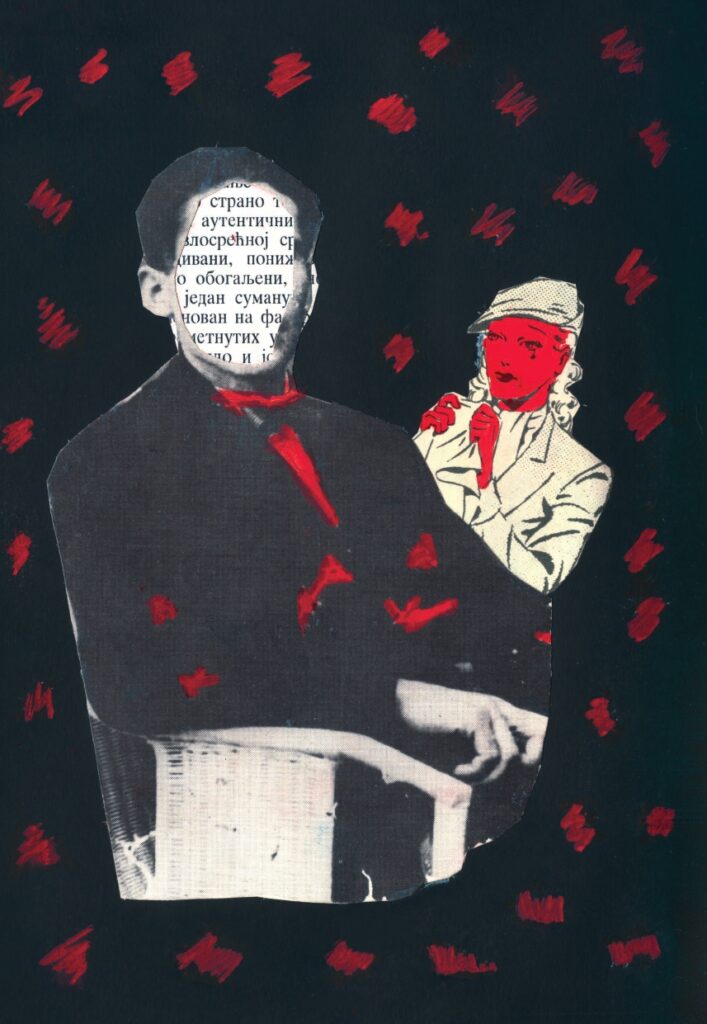
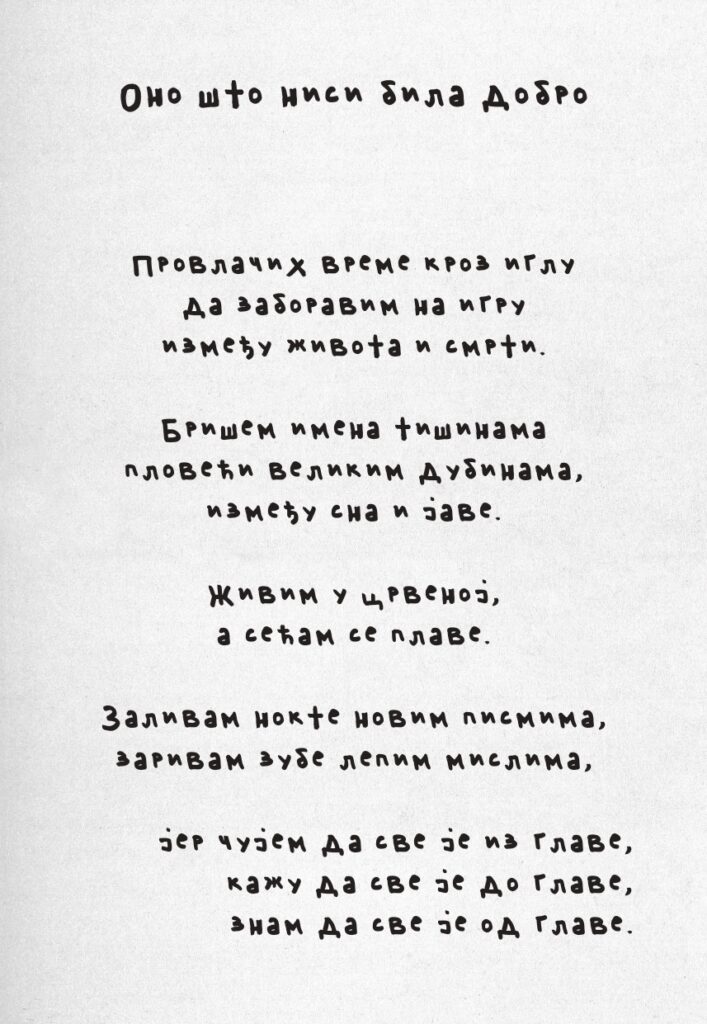
The piece I am submitting is titled Ono što nisi bila dobro, taken from my self-published art book of the same name (2024), which is currently in preparation for its third edition. The work emerges from an ongoing exploration of neurological rollercoasters—particularly anxiety—as well as the fragmentation between body and mind, disrupted perception, and the instability of inhabiting one’s own interior landscape. Through a fragmented, lyrical structure, the poem navigates states of dissonance, repetition, and rupture, reflecting the embodied experience of mental and neurological unrest.
As the text is part of a visual art book, I will also include accompanying visuals—the original page layout and imagery as they appear in the publication—to provide context for how the poem exists within a broader interdisciplinary framework.
Leave a Reply